Blockchain Technology: Cost, ROI, and Business Use Cases in 2026
Last updated: December 17, 2025 By Sunil Shaw
Introduction
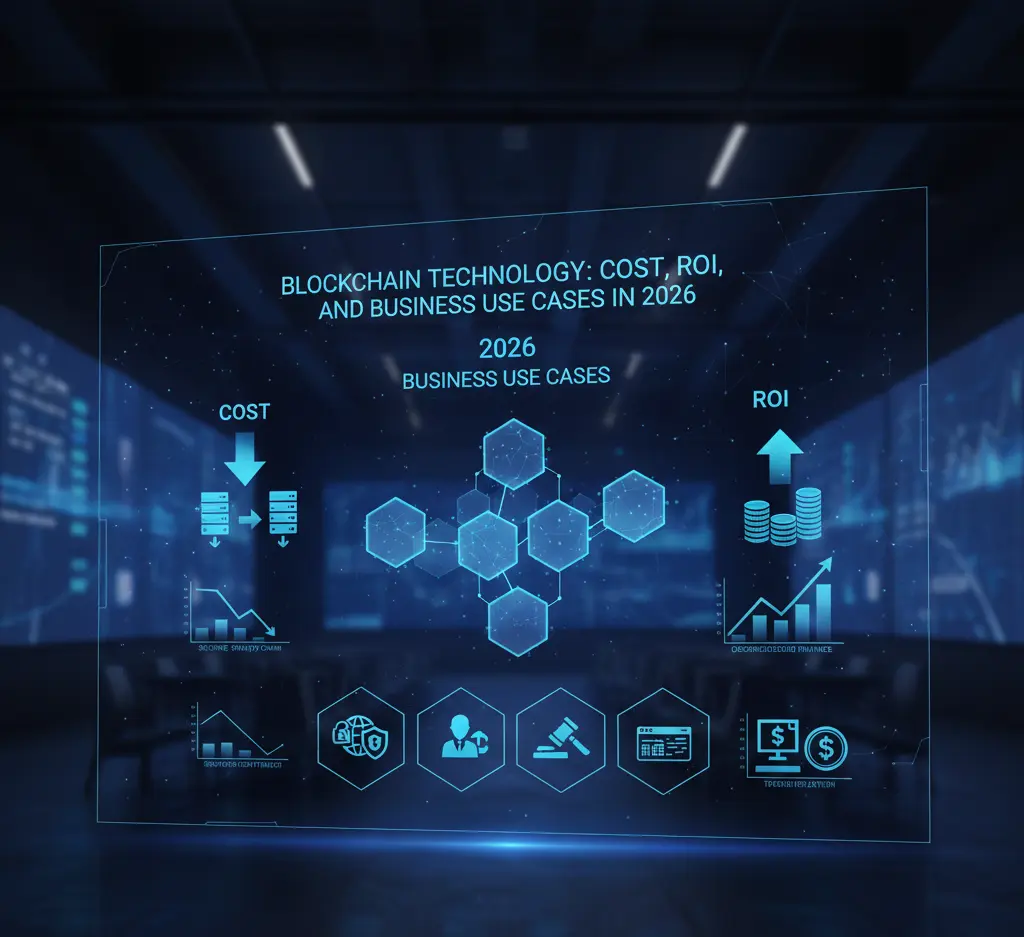
Blockchain technology cost has become a major discussion point for businesses planning digital transformation in 2026. While blockchain is often associated with innovation and decentralization, companies today evaluate it based on technology cost, IT budget impact, and measurable technology ROI. This article explores the cost structure, return on investment (ROI), and real-world business use cases of blockchain technology from a financial perspective.
From startups to enterprises, decision-makers now ask a critical question: Is blockchain a cost-effective technology investment?
What Is Blockchain Technology?
Blockchain is a distributed digital ledger that records transactions securely across multiple systems. Unlike traditional databases, blockchain removes the need for centralized control, reducing dependency on intermediaries.
From a business standpoint, blockchain is not just a technical upgrade – it is a technology investment that directly affects software cost, automation cost, and operational efficiency.
Blockchain Technology Cost Breakdown in 2026
Understanding blockchain adoption starts with cost analysis.
1. Development and Implementation Cost
Blockchain systems require:
- Custom software development
- Smart contract design
- Integration with existing systems
This increases initial software development cost, especially for private or enterprise blockchains.
2. Infrastructure and Cloud Computing Cost
Most blockchain platforms run on cloud infrastructure.
Key expenses include:
- Cloud computing cost
- Node hosting and maintenance
- Storage and network usage
However, cloud-based blockchain reduces long-term infrastructure expenses compared to on-premise systems.
3. Maintenance and Operational Cost
Blockchain systems require:
- Continuous monitoring
- Security audits
- Network upgrades
Although maintenance exists, automation reduces recurring software maintenance cost over time.
Blockchain ROI: Is the Investment Worth It?
How Blockchain Improves Technology ROI
Blockchain improves technology ROI by:
- Reducing transaction processing time
- Eliminating intermediaries and third-party fees
- Improving data accuracy and transparency
These benefits translate into direct operational cost reduction.
Financial Metrics Businesses Consider
In 2026, companies evaluate blockchain ROI using:
- Cost savings per transaction
- Automation cost reduction
- Long-term scalability impact on IT budget
Blockchain adoption shifts spending from repetitive operational expenses to strategic technology investment.
Business Use Cases of Blockchain in 2026
1. Finance and Payments
Blockchain reduces:
- Transaction fees
- Reconciliation cost
- Fraud-related losses
This lowers overall technology cost while improving financial transparency.
2. Supply Chain Management
Blockchain enables:
- Real-time tracking
- Automated verification
- Reduced manual documentation
Result: lower automation cost and improved operational efficiency.
3. Smart Contracts and Automation
Smart contracts automatically execute agreements when conditions are met.
Financial impact:
- Reduced legal and administrative expenses
- Faster execution cycles
- Lower long-term software cost
4. Identity and Data Security
Blockchain-based identity systems reduce:
- Data breach risk
- Compliance-related expenses
This improves IT budget efficiency and lowers security-related operational costs.
Blockchain vs Traditional Systems: Cost Comparison
| Factor | Traditional Systems | Blockchain Technology |
|---|---|---|
| Software Cost | High recurring licenses | Lower long-term cost |
| Automation Cost | Limited | High automation |
| Cloud Computing Cost | Predictable | Optimized with scaling |
| Technology ROI | Moderate | High over long term |
Financial Risks and Challenges
Despite its benefits, blockchain adoption includes risks:
- High initial technology cost
- Regulatory compliance expenses
- Skilled workforce requirements
Businesses must align blockchain strategy with realistic IT budget planning to avoid cost overruns.
Is Blockchain a Smart Technology Investment in 2026?
From a financial standpoint, blockchain is no longer an experimental technology. When evaluated against technology cost, software cost, cloud computing cost, and long-term technology ROI, blockchain offers strong value for businesses that require transparency, automation, and trust.
Companies that implement blockchain with a clear cost-benefit strategy achieve higher operational efficiency and sustainable growth.
How AI Reduces Operational Cost for Startups
Final Thoughts: Blockchain and Financial Efficiency
Blockchain is not just about decentralization or innovation – it is about financial efficiency and long-term value creation.
Blockchain technology cost becomes justified when businesses focus on automation, reduced operational expenses, and measurable technology ROI. In 2026, organizations that treat blockchain as a strategic technology investment rather than a trend gain better cost control, improved IT budget management, and a scalable foundation for future growth.
Follow on:


Sunil Shaw
About Author
I am a Web Developer, Love to write code and explain in brief. I Worked on several projects and completed in no time.
View all posts by Sunil Shaw

























Leave a Comment